Employee Shift Schedule Template (Free Excel, Google Sheets and PDF)


SMALL BUSINESS INTEL, IN YOUR INBOX
Table of contents
Still building your team's schedule from scratch every week? You don't have to. A good employee shift schedule template saves you hours and gives your crew the clarity they need to show up ready.
In this post, you'll find free downloadable shift schedule templates in Excel, Google Sheets, and printable PDF formats, plus step-by-step instructions for customizing each one. Whether you run a restaurant, retail shop, salon, or clinic, there's a template here that fits. And when you're ready to ditch spreadsheets altogether, we'll show you how to build schedules automatically with Homebase.
Free employee shift schedule templates at a glance
Looking for an employee shift schedule template? Here's what you need to know:
- Downloadable templates: Weekly, daily, night shift, 8-hour, 10-hour, 12-hour rotating, and monthly formats
- Available in: Excel, Google Sheets, and printable PDF
- Designed for: Restaurants, retail, healthcare, salons, and service teams
- Easy to customize with employee names, roles, start/end times, breaks, and total hours
- Best for: Small businesses managing hourly employees on rotating or fixed schedules
Need more automation? Skip spreadsheets and build schedules automatically with Homebase.
What is an employee shift schedule template?
An employee shift schedule template is a pre-formatted spreadsheet or document that helps you organize who's working, when, and in what role. Instead of starting from a blank page every single week, you plug in your team's info and go.
Most templates include columns for employee names, job roles, shift start and end times, break periods, and total hours worked. Some also have space for notes like opening or closing duties.
You'll see these used by restaurants, retail stores, salons, clinics, warehouses, and pretty much any business that runs on hourly shifts. They're especially popular with small business owners and managers juggling multiple people across different days and times.
Templates work well when your team is small, your schedule is fairly consistent, and you're not dealing with a ton of shift swaps or last-minute changes. They give you structure without requiring specialized software.
Free employee shift schedule templates (download library)
Below you'll find six ready-to-use shift schedule templates. Each one is designed for a specific scheduling need, and every template is available in Excel, Google Sheets, and printable PDF. Download whichever format works for your team, customize it with your employees' names and roles, and you're set.
Weekly shift schedule template
This is the one most managers reach for first, and for good reason. It gives you a full seven-day view with rows for each team member and columns for each day. You can assign specific shifts, track start and end times, and spot coverage gaps at a glance.
It's ideal if you create a new schedule each week based on employee availability, time off requests, and expected sales volume. It also makes sharing easy, whether you print it out or send a quick link.
Best for: Restaurants, retail stores, and service businesses with weekly scheduling cycles.
Download formats:
Daily shift schedule template
When your staffing needs swing wildly from day to day, or you need to schedule by the hour, a daily template gives you more room. This format breaks each day into individual time blocks so you can assign employees to specific hours and stations.
Best for: Busy restaurants, event venues, and businesses where today looks nothing like tomorrow.
Download formats:
8-hour shift schedule template
If your team works standard 8-hour shifts, this one keeps things simple. It's structured around three shifts per day (morning, afternoon, night) and lets you assign team members to each one across the week.
Best for: Retail, food service, and customer-facing businesses running traditional 8-hour rotations.
Download formats:
10-hour shift schedule template
Longer shifts mean fewer days on the job, and that's something many hourly workers actually prefer. This template is set up for 10-hour shift blocks and helps you track who's covering which days without accidentally tipping into overtime.
Best for: Healthcare facilities, manufacturing, warehouses, and businesses with compressed workweeks.
Download formats:
12-hour rotating shift schedule template
For teams that run around the clock, 12-hour rotating shifts help you maintain full coverage with fewer handoffs. This template maps out multi-week rotation cycles so you can see who's working days, who's working nights, and when each team gets their days off.
Best for: Emergency services, hospitals, security, logistics, and any operation that never closes.
Download formats:
Monthly shift schedule template
Sometimes you need the big picture. A monthly shift schedule template gives you a bird's-eye view of your team's schedule across four or five weeks. That makes it way easier to plan ahead for holidays, seasonal rushes, and PTO coverage.
This is a great pick if your schedule doesn't change dramatically week to week and you want to give your team more advance notice. It also helps with forecasting labor costs over a longer stretch.
Best for: Businesses with stable, predictable schedules who want to plan further ahead, like salons, clinics, and small offices.
Download formats:
Which shift schedule template should you use?
Not sure which template to start with? Here's a quick breakdown based on how your business runs.
- Weekly vs. daily: If your staffing stays fairly consistent day to day, a weekly template keeps things simple. If you've got major swings in coverage (think: a restaurant that's dead Monday but packed Friday), go daily for more control.
- Fixed vs. rotating shifts: Fixed schedules, where each person works the same days and times, are easier to manage and only need a basic weekly template. Rotating schedules, where employees cycle through different shifts, need a template built for multi-week patterns (like the 12-hour rotating template above).
- Night shifts: If you run overnight operations, make sure your template accounts for shifts that cross midnight. Standard templates that end at a set time can cause confusion and miscalculate hours for your late-night crew.
- Multi-location teams: Managing more than one location? Use a separate template for each site to avoid mix-ups. Label each clearly and keep them in a shared folder so every manager has access. (Or try multi-location scheduling in Homebase.)
- Growing teams: When you have just a handful of employees, any of these templates will do. But once you're managing 15+ people and juggling shift swaps, time off, and overtime tracking, spreadsheets get messy fast. That's usually the signal to move to scheduling software.
How to use a shift schedule template in Google Sheets or Excel
Using modern scheduling software is the easiest and quickest way to schedule employee shifts. But if you still prefer creating your schedules with old-school spreadsheets, here are the best ways to do it with templates.
Creating an employee shift schedule with Google Sheets
First, to create an employee shift schedule in Google Sheets:
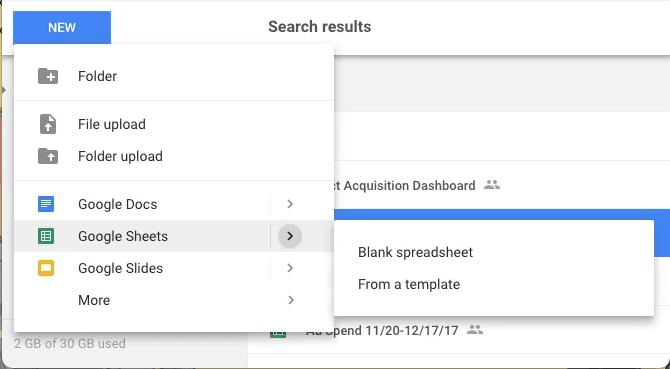
- Go to “Google Drive.”
- Click “New,” hover over the arrow next to “Google Sheets,” and choose “From a template.”
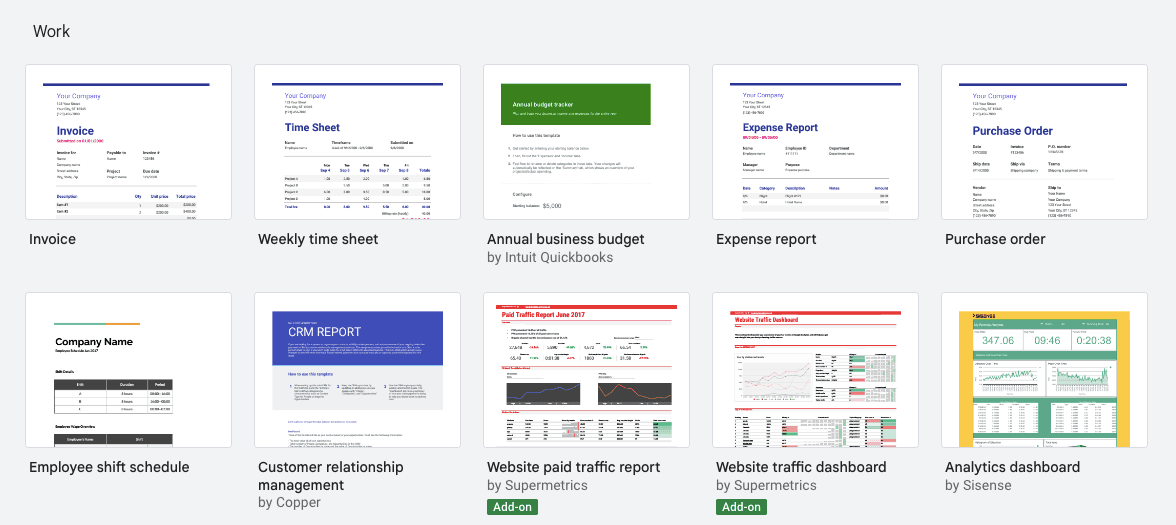
- On the next page, the template gallery, choose “Employee shift schedule.”
- Now, it’s time to customize. Google’s template includes a monthly overview as well as weekly schedules.
- Customize your color scheme and, if you’d like, add your logo. It’ll make your schedule look more professional and only takes a few minutes.
- Build your schedule.
Creating an employee shift schedule with Excel
Here’s how to create an employee shift schedule in Excel:
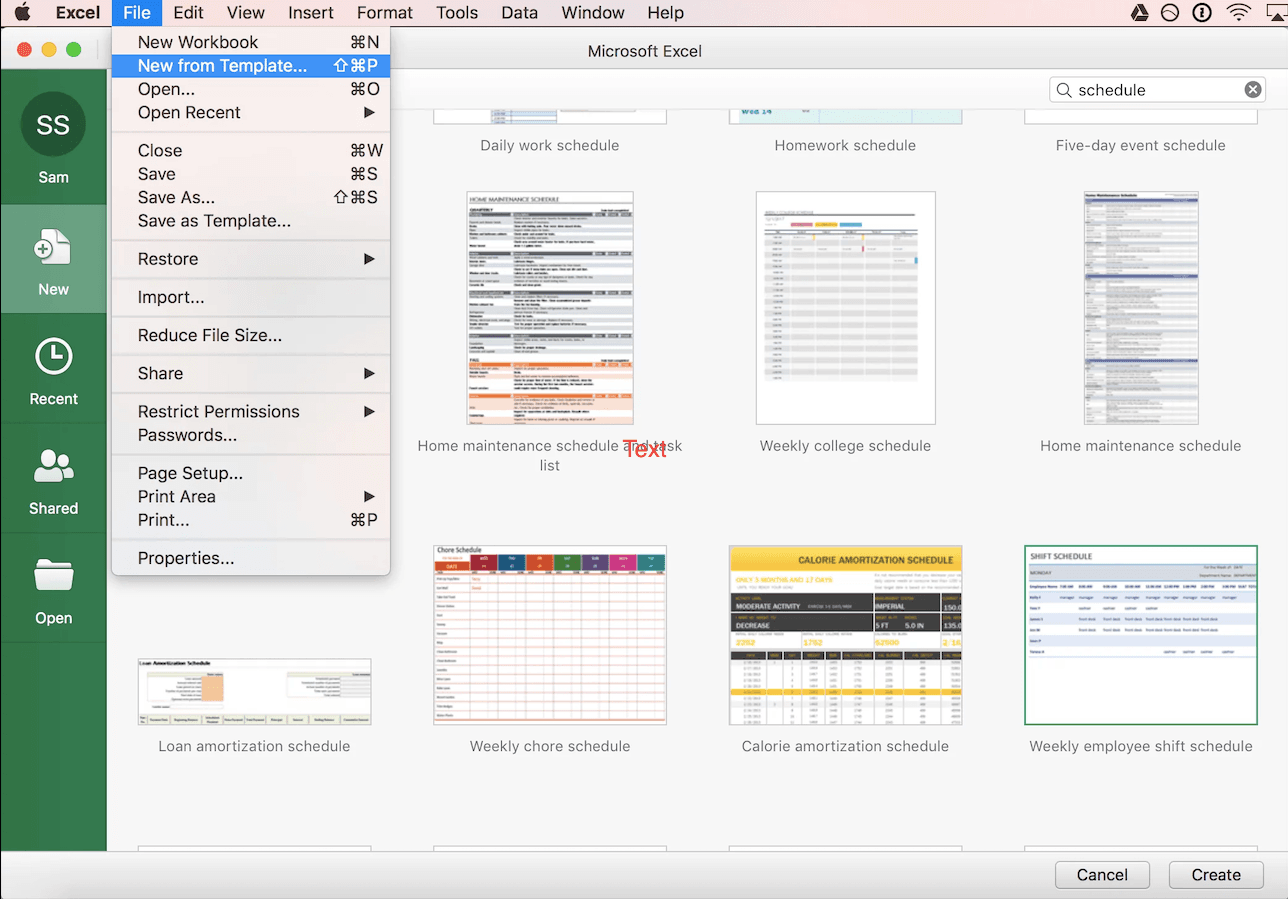
- Go to “File” and then “New From Template.”
- In the search box in the upper right corner of the “Template Gallery,” search for “schedule.”
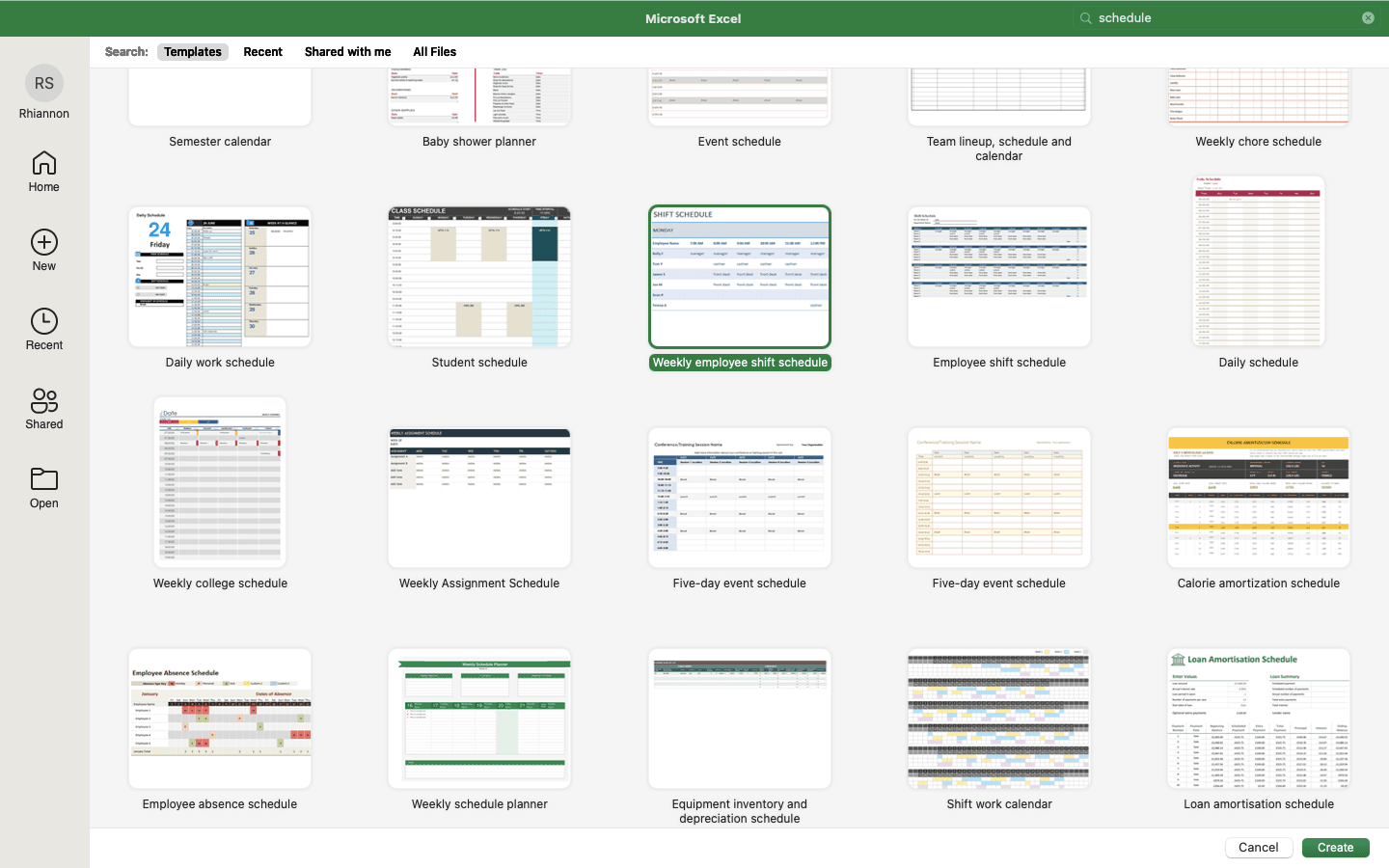
- Scroll down and you’ll see a template called “Weekly employee shift schedule.”
- Double-click on the template and a new spreadsheet with this template will open.
- Customize your template — highlight cells and change the background colors to match your business’s branding.
- Add your logo. Go to “Insert” and “Picture.” It’s a quick step that’ll add some customization.
- Add in your employees’ names and build your schedule.
Remember, you’ll have to repeat those steps every time you want to make a new schedule. Sounds like a lot of manual work, doesn’t it? Let’s look at a simpler method that’ll save you tons of time in the long run — using Homebase to schedule your shifts.
Shift scheduling best practices for small businesses
A template gives you structure, but how you fill it out is what makes the real difference. Here are a few things that'll keep your schedules fair, accurate, and a lot less stressful.
- Collect availability before you schedule. Ask your team for their availability and time off requests before you start building. This avoids the frustrating cycle of posting a schedule, getting pushback, and having to redo the whole thing.
- Publish schedules as early as you can. Most team members want at least a week's notice, and in some states, predictive scheduling laws actually require it. The earlier you share, the fewer last-minute fires you'll put out.
- Watch for overtime. It's surprisingly easy to accidentally schedule someone past 40 hours, especially if they pick up an extra shift. Track weekly totals closely and flag anyone getting close before the schedule goes out. Here's a refresher on overtime rules by state.
- Plan around your busiest hours. Use sales data or foot traffic patterns to schedule heavier staffing during peak periods. This keeps service quality high without blowing your labor budget during slower stretches.
- Account for break and labor laws. Federal, state, and city regulations dictate how long team members can work before they need a break. Build those into the schedule upfront so you're not scrambling to stay compliant mid-shift.
- Keep a record. Save your past schedules. You'll thank yourself when you need to reference historical staffing patterns, resolve a time card dispute, or plan for next year's holiday rush.
Scheduling in advance becomes easier with scheduling tools. Fred S., the owner of Fix Coffee + Bikes, uses Homebase to support his team: "You can drag and drop and edit. You can duplicate schedules. It's like it's a real time saver. We try to get the schedule published as far in advance as possible. We aim for three or four weeks ahead so our team knows."
When templates stop working
Shift schedule templates are a great starting point. But as your team grows or your operations get more complex, spreadsheets start to crack.
- Manual updates get messy. Every time someone calls out or swaps a shift, you're editing cells, resending files, and hoping everyone sees the latest version. One outdated printout on the break room wall can throw off an entire day.
- Shift swaps turn into your second job. Without a system for managing trades, you end up in the middle of every swap, fielding texts, checking availability, and manually updating the sheet. That's time you're not spending on your business.
- Overtime tracking gets risky. Spreadsheets don't warn you when someone is about to hit 40 hours. By the time you notice, the overtime is already on the books, and so is the cost.
- Version control falls apart. When you're emailing Excel files or sharing links to Google Sheets, it's only a matter of time before someone's working off an old version. That means missed shifts, double-coverage, or no-shows.
If any of that sounds familiar, it might be time to move beyond templates.

Build your employee shift schedule automatically
Using Homebase is the easiest way to create a work schedule – certainly better than a manual shift schedule template. In just a few steps, you’ll have your schedule set up and ready to share. Best of all, it’s free!
Here’s how you can create your employee schedule automatically with Homebase:
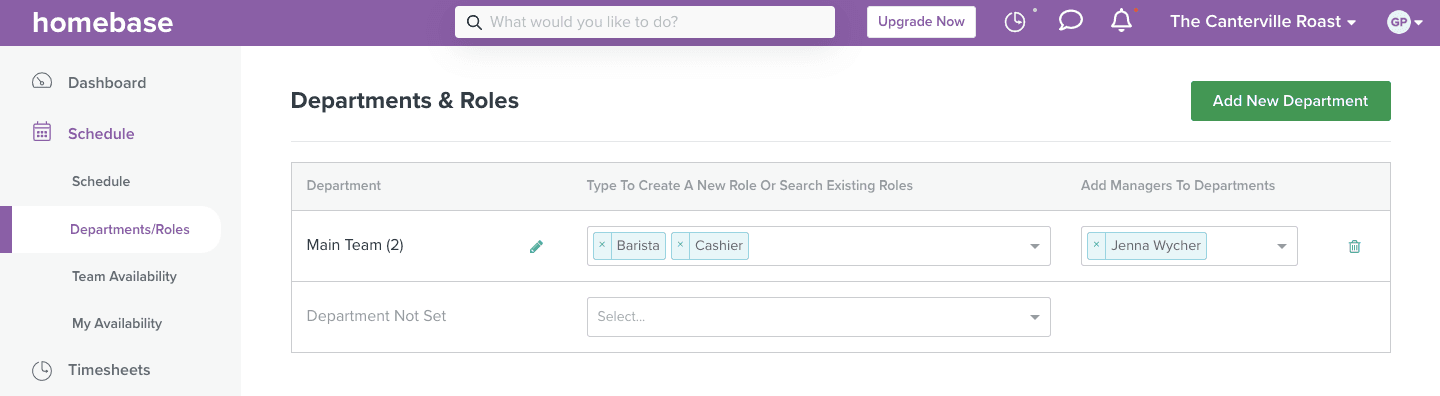
- First, create employee roles. Click on “Schedule” in the main menu and then “Departments/Roles.” From there, click on the “Add New Department” green button.
- Type in the box to create new roles or scroll down to select old ones. Then, name the department whatever you like.
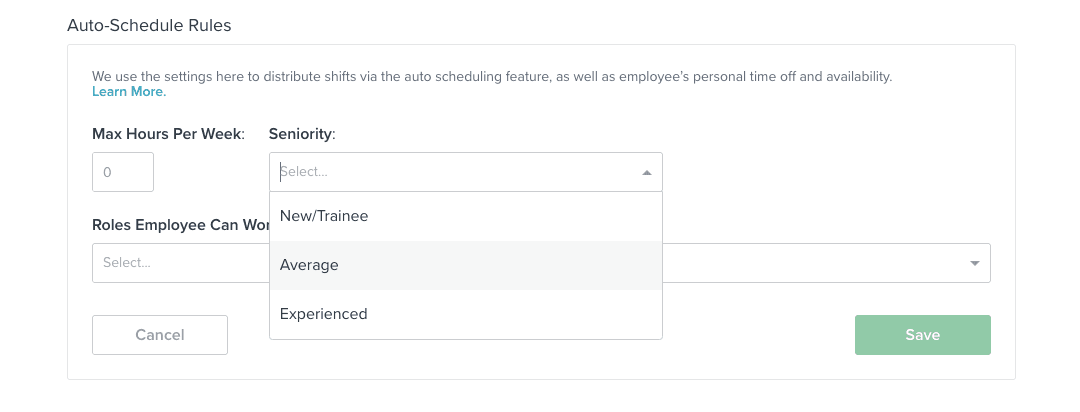
- Now, to set up your employee auto-scheduling rules. Click on the “Team” tab in the main menu to pull up a list of your employees. Click on any employee to open their profile.
- Find the “Auto-Schedule rules” at the bottom of the “Job Details” page. Assign the employee their maximum weekly hours, seniority, and roles.
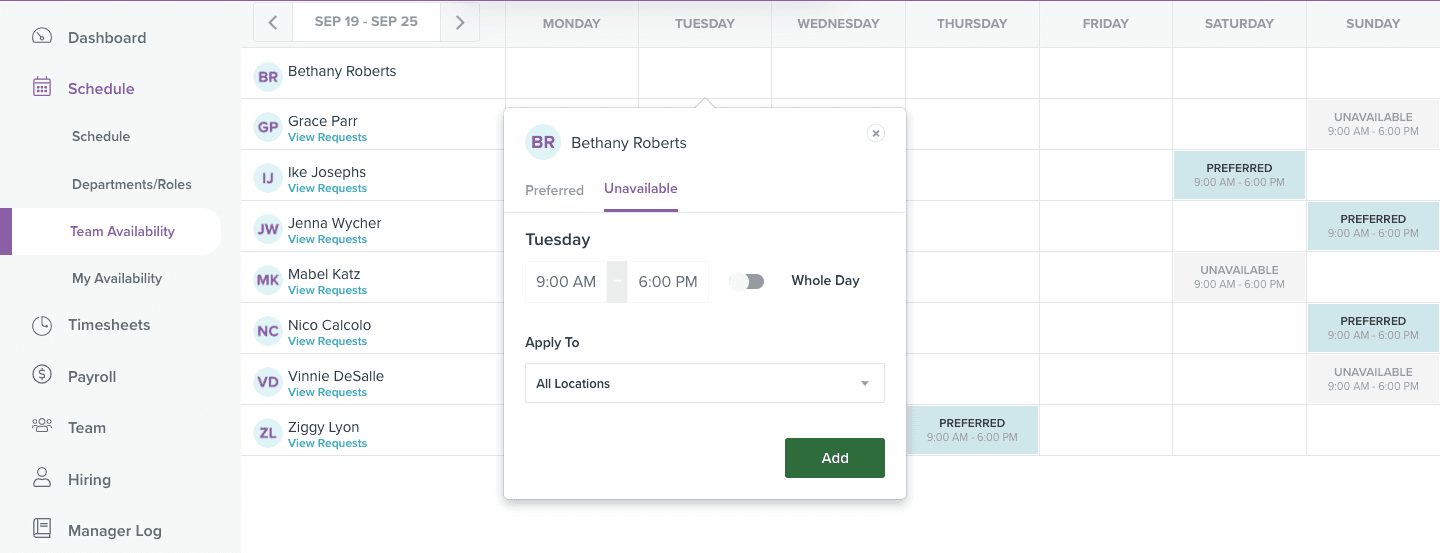
- If you know your team members’ availability, you can go ahead and set it. Go to the “Schedule” tab again and this time, click on “Team Availability.”
- You’ll see a table where rows are employees and columns are days of the week. Each box is a potential shift. Click on a box and select “Unavailable” to show that an employee can’t work it.
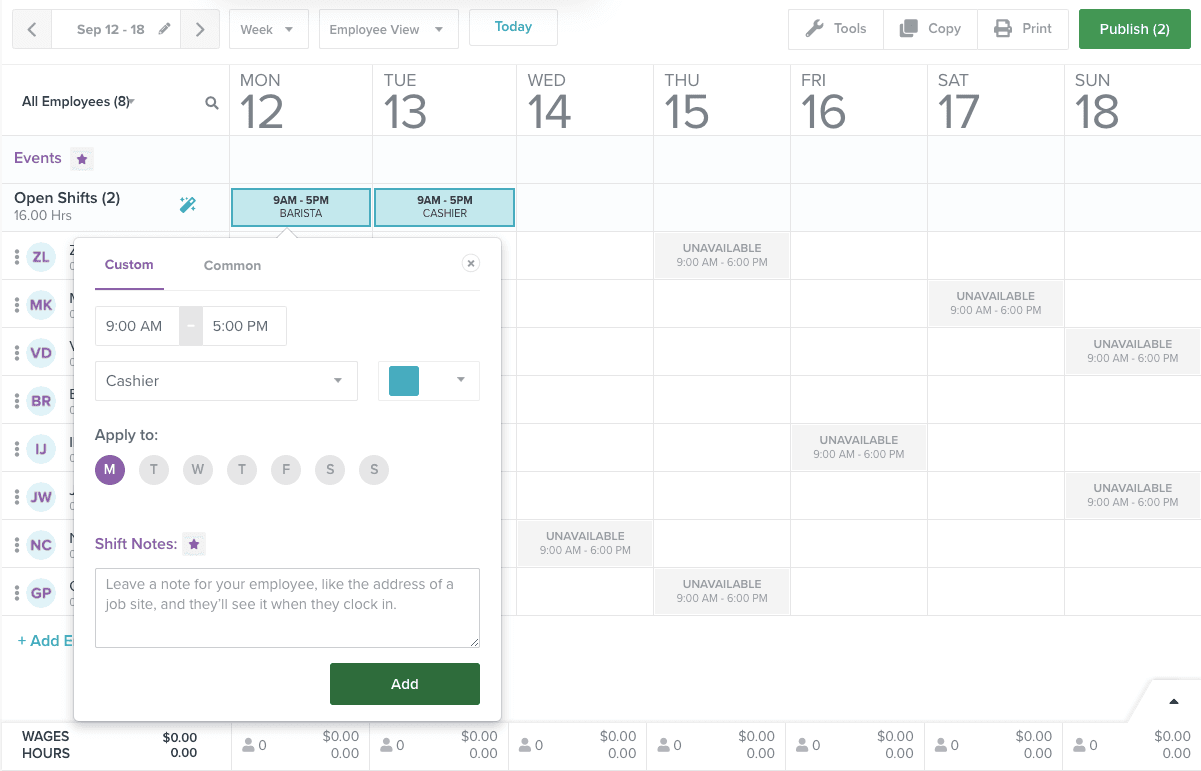
- You’re ready to make some weekly schedule templates. Inside the “Schedule” tab, select a week.
- At the top of the table, there’s a row called “Open Shifts.” Click on a box in that row to add the roles you need for that shift.
- Go to “Tools” at the top of the “Schedule” page and select “Templates” from the drop-down menu. Name your weekly schedule template and hit “Create.”
- Now we get to the good bit! Go to the week you want to automate and go to “Templates” in the “Tools” drop-down menu one more time. Choose the template you want to work with and hit “Apply.”
- Do you see the wand icon in the “Open Shifts” box? Click on it, and — presto — you have your schedule ready to go.
- Make any changes you need to and hit the “Publish” button.
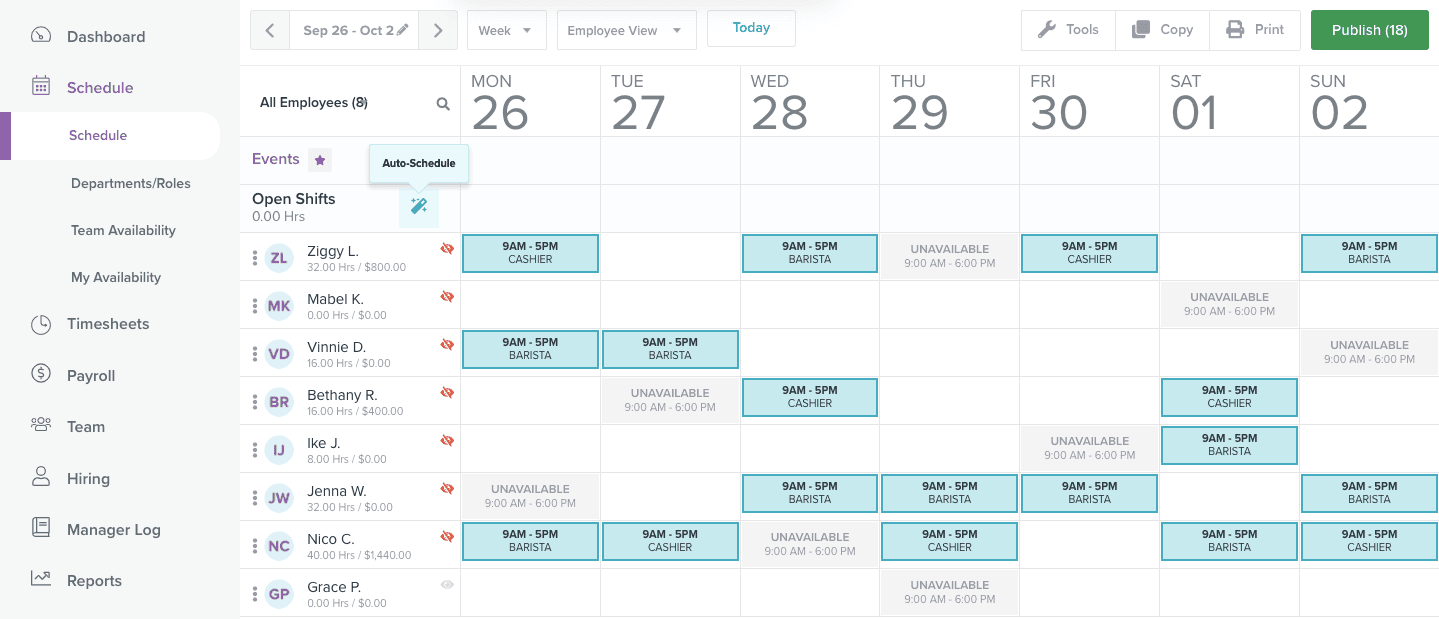
And that’s it! All the schedules you need are set up and ready to go for weeks to come.
Employee shift schedule template FAQ
What should be included in a shift schedule template?
A solid shift schedule template includes employee names, job roles, shift start and end times, break periods, and total hours worked. Many templates also have a notes column for task assignments or special instructions. The goal is giving every team member a clear picture of when they work and what's expected of them.
How do I create a rotating shift schedule?
Start with a template designed for rotation cycles, like the 12-hour rotating template above. Map out which team members cover day shifts and night shifts across a two- to four-week cycle, then repeat the pattern. Make sure each team gets roughly equal time on preferred and less-preferred shifts to keep things fair. Here's our full guide to rotating schedules.
What's the best format for a shift schedule?
It depends on your team. Google Sheets is great for real-time sharing and remote access. Excel gives you more formatting and formula power. PDF works best when you need a clean, printable version for a break room bulletin board. Most managers end up using a combo: digital for sharing, printed for quick reference.
How far in advance should schedules be posted?
At minimum, aim for one week ahead. Two weeks is even better, and some states with predictive scheduling laws require more notice than that. Posting early reduces last-minute changes, gives your team time to plan their lives around work, and cuts down on no-shows.
Can I use Google Sheets for employee scheduling?
Absolutely. Google Sheets is a popular choice for small teams because it's free, accessible from any device, and easy to share. The biggest limitation? It won't send automatic reminders, flag overtime, or let team members swap shifts on their own. Those are the kinds of things you'll want as your team grows.
When should I switch from templates to scheduling software?
If you're spending more than 30 minutes a week on scheduling, dealing with constant shift swaps, managing more than one location, or losing track of overtime, it's time. Scheduling apps like Homebase handle all of that automatically, and our basic plan is free.
Take the next step
Employee shift schedule templates give you a solid foundation, but they're just the start. Whether you stick with spreadsheets or move to something more powerful, the most important thing is giving your team a schedule they can count on. Predictable schedules mean fewer no-shows, happier team members, and a smoother operation every day.
Ready to stop rebuilding from scratch? Get started with Homebase for free and see how much time you get back.